Free · no sign-up

Rap lyrics generator

Give it a theme and get a full song back — two verses, a hook that repeats, and the section tags already in place so you can drop it straight into a beat.

Style
Tone
  • A whole song, not fragments

    Two sixteen-bar verses and a hook that repeats, written to hold together start to finish rather than as a pile of good lines that do not follow each other.

  • Section tags already in place

    The output comes tagged with [Verse] and [Hook], which is the format the song generator reads — so it becomes a track without you reformatting anything.

  • Free, and no account needed

    Guests get a set number of runs a day with no sign-up. Signing up raises the limit and is also free.

Songs made here

Hear more →
01

START FROM A SPECIFIC IMAGE, NOT A TOPIC

The difference between a verse that lands and one that evaporates is almost always concreteness. "Struggle" gives you nothing to hold. "Counting coins on the bus at 6am" gives you a scene, a time, a sound, and a rhyme family to work in.

So when you fill the box below, resist the urge to write a category. Write the moment. The model will widen it into sixteen bars — but it can only widen what you gave it, and a vague seed grows into vague writing.

An open notebook covered in handwriting, a pencil and crumpled paper

WHY THE SECTION TAGS MATTER

Marking your text with [Verse], [Hook] and [Bridge] is not decoration. It tells anything reading the lyrics — a collaborator, a producer, or the song generator on this site — where the energy should climb and where the repeated part belongs.

Songs written with tags come back tighter than the same words pasted in as a single block, because the structure is stated instead of guessed. Keep the tags when you move the text over to make the actual track.

03

EDIT LIKE A WRITER, NOT A PROOFREADER

Treat what comes back as a first draft with the boring part already done. The lines worth keeping are the ones that surprise you; the ones to cut are the ones you could have predicted from the theme alone.

A useful pass: read it out loud at the tempo you imagine. Anything you stumble over is a rhythm problem, not a word problem — swap the word for a shorter one rather than rewriting the thought.

04

HOW A VERSE IS ACTUALLY BUILT

Sixteen bars is the standard verse, and it is not sixteen unrelated good lines. It has a shape, and knowing the shape is what turns editing from guesswork into a decision.

The pattern most verses follow is simple enough to check your own draft against: an opening that establishes where you are, a middle that complicates it, and a last pair that lands somewhere the opening did not promise.

  1. 1Bars 1–4 set the scene. One concrete image is worth four statements of mood.
  2. 2Bars 5–8 add pressure — the thing that went wrong, the thing you want, the person who left.
  3. 3Bars 9–12 turn. This is where a verse either earns the hook or fills time.
  4. 4Bars 13–16 land it. The strongest line in a verse belongs at the end, not the start.
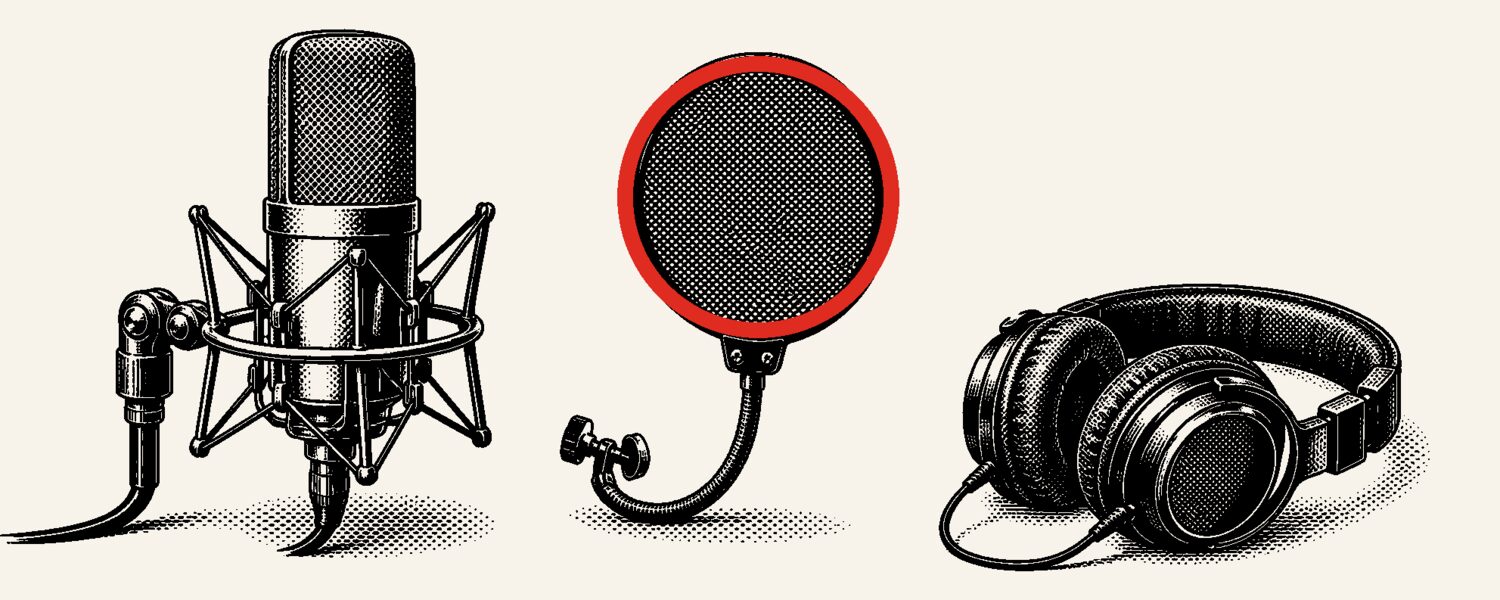
A studio microphone on a shock mount, a pop filter and a pair of headphones

RHYME IS NOT ONLY AT THE END OF THE LINE

End rhyme is what everyone hears first and the least interesting thing a verse can do. What separates writing that sounds professional from writing that sounds like a greetings card is internal rhyme — sounds echoing inside the line, before the line ends.

The other half is slant rhyme. Exact rhymes run out fast and force you toward whatever word happens to fit, which is how a verse ends up about nothing. Near-rhymes keep the sound and give the meaning back.

A test you can run on any draft: read it aloud and mark where you hear the rhyme. If every mark is at the end of a line, the verse is doing one thing when it could be doing three.

06

FROM WORDS TO AN ACTUAL SONG

Lyrics on a page are half the job, and the half that is easier to judge. The moment they meet a beat, problems you could not see become obvious — lines that are too long to breathe, a hook that does not repeat comfortably, a verse whose energy peaks in the wrong place.

That is the argument for hearing a draft early rather than polishing on paper. Send the words to the song generator and it comes back sung over a beat in about a minute, and the mismatch is audible immediately. Keep the section tags when you send them; they are how the structure survives the trip.

Questions

More free rap tools

Keep going